This blog post is a synopsis of this webinar presented in partnership with 57hours:
If you’re drawn to untracked powder, wild terrain, and the feeling of earning your turns far from the lift lines, welcome to the world of backcountry skiing. It’s thrilling, immersive, humbling, and rewarding—but it demands preparation, knowledge, and the right mindset. I will walk you through the essentials of backcountry skiing: from gear and avalanche awareness to the all-important human factor.
What is Backcountry Skiing?
Before we dive into gear and tactics, it helps to understand the types of skiing that exist beyond the groomers.
- On-Piste: Skiing within marked and patrolled resort boundaries.
- Off-Piste / Slackcountry: Areas accessible from a lift but not patrolled or avalanche-controlled.
- Sidecountry: Terrain accessed by lifts but requires skins or bootpacking; once you leave the resort boundary, you’re on your own.
- Backcountry: Remote, unpatrolled terrain. You rely entirely on your own knowledge, gear, and group.
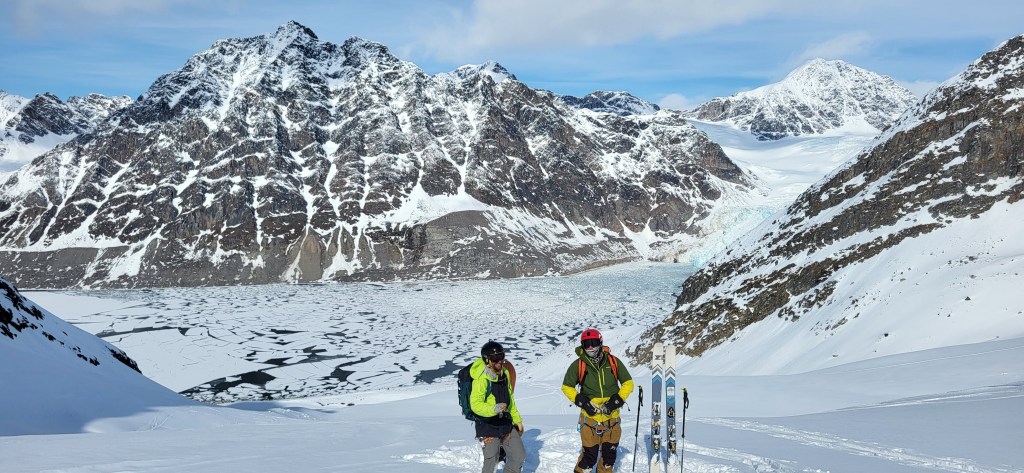
Backcountry skiing offers the opportunity to ski incredible lines in stunning places—from Alaska couloirs to Chilean volcanoes to the classic lines of the Wasatch. But with that freedom comes risk.
Why Do We Do It?
The motivation varies. Some crave adventure and exploration. Others seek solitude, connection with nature, or physical challenge. For me, it started in Vermont 33 years ago and grew through years of resort skiing, ski clubs in Germany, and eventually ski mountaineering in Alaska and South America.
Backcountry skiing blends athleticism, strategy, and wilderness experience. Whether you’re climbing a volcano in Patagonia or skinning up Mount Superior in Utah, the journey is as powerful as the descent.
The Gear: Building Your Backcountry Kit
Backcountry gear is specialized to allow uphill travel, efficient movement, and avalanche preparedness. Here are the essentials:
Touring Skis

Touring skis differ by style and intended use:
- Alpine Touring (AT): Balanced for uphill and downhill. Look for waist widths of 85-105mm.
- Ski Mountaineering: Lightweight and narrow, ideal for long approaches and technical ascents.
- Freeride Touring: Wider skis (105-115mm) for playful descents in soft snow.
- Powder Skis: Super wide (117mm+), great for deep snow days in places like Alaska.
Choose based on your terrain, snow type, and preferences. Don’t overthink the quiver at first—start with one versatile pair.
Bindings
Bindings are critical for uphill efficiency and downhill performance.
- Tech Bindings: Lightweight with a toe and heel pin system. Great for touring but require compatible boots.
- Frame Bindings: Heavier, with a frame underfoot; becoming outdated.
- Hybrid Bindings: e.g., Salomon Shift. Allow ski resort-level performance with uphill capability.
- Splitboard Bindings: For snowboarders. Tech options available for hardboot setups.
Boots
Touring boots differ from resort boots. They offer a walk mode, tech inserts, and are lighter.
- Get a boot that fits perfectly.
- Prioritize range of motion and comfort.
- Work with a boot fitter and don’t buy online unless you’re replacing a known fit.

Skins
Skins provide grip on the uphill.
- Nylon: Durable and grippy, slightly heavier.
- Mohair: Lighter, better glide.
- Blends: A good balance for beginners.
Keep your skins clean, store them in a cool dry place, and avoid getting pet hair or pine needles on the glue side.
Poles
Adjustable poles are helpful for climbing and descending.
- Look for extended grips to choke up on steep ascents.
- Any ski pole will work, but touring-specific poles offer more versatility.
Backpack
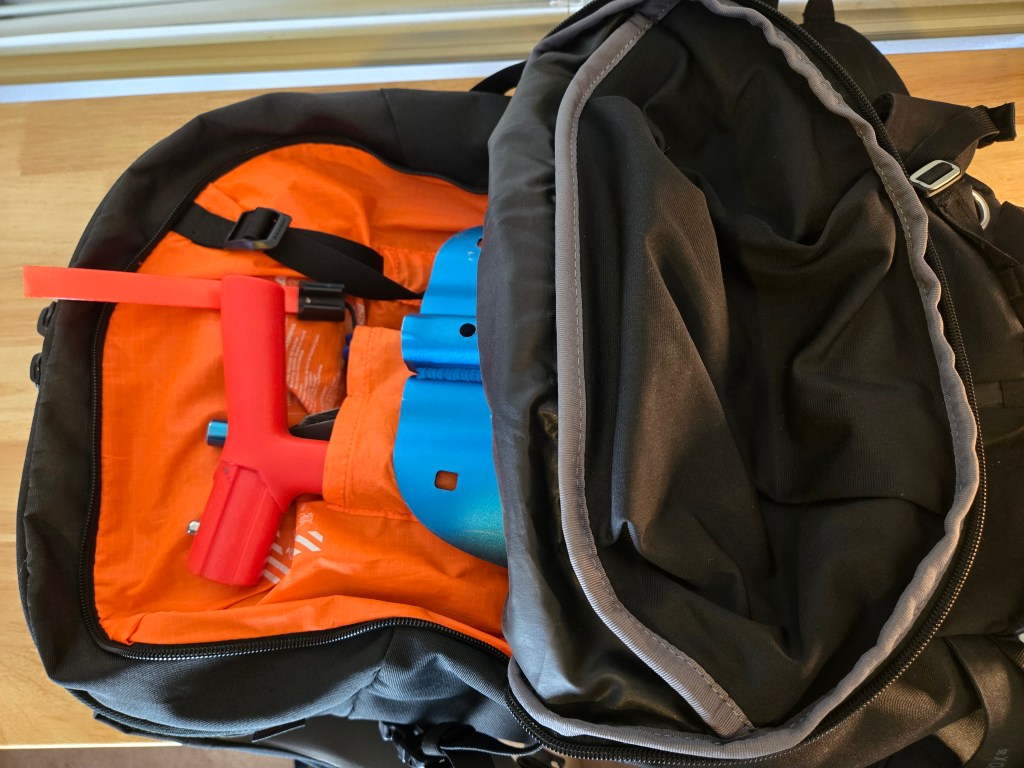
Choose a pack with an avalanche safety pocket and ski carry options.
- Keep shovel and probe accessible.
- Don’t bury rescue gear under food or extra layers.
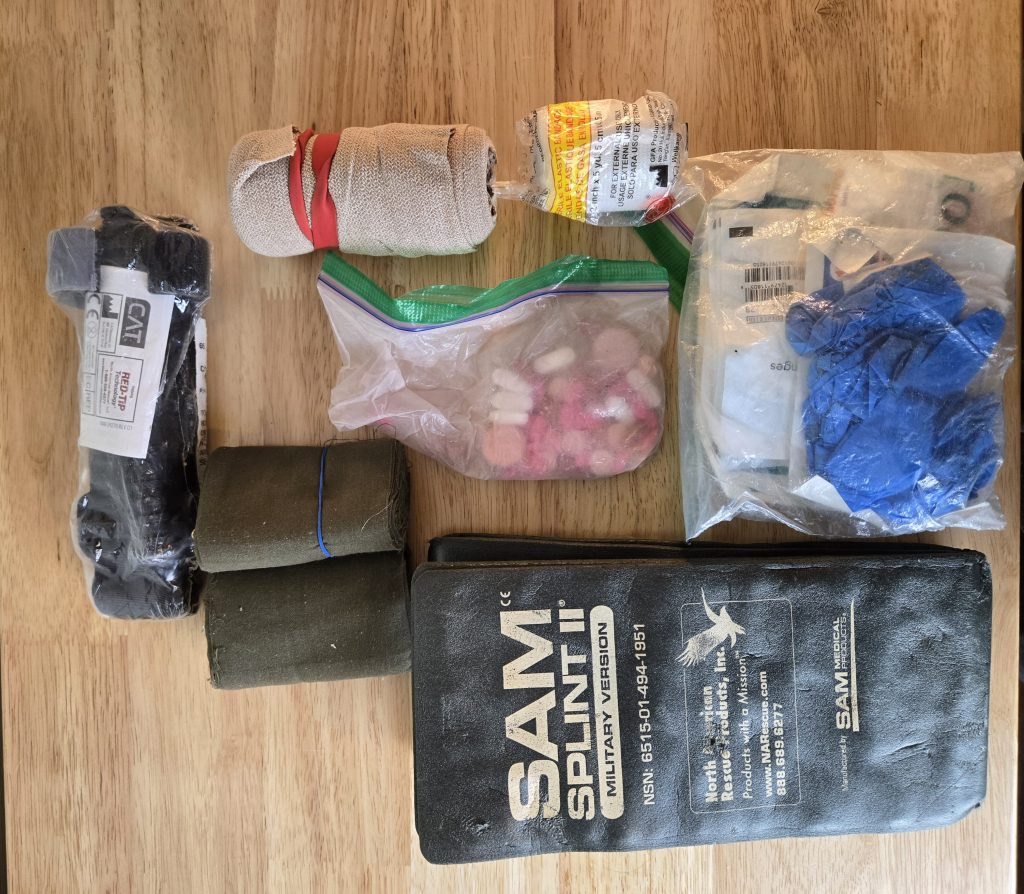
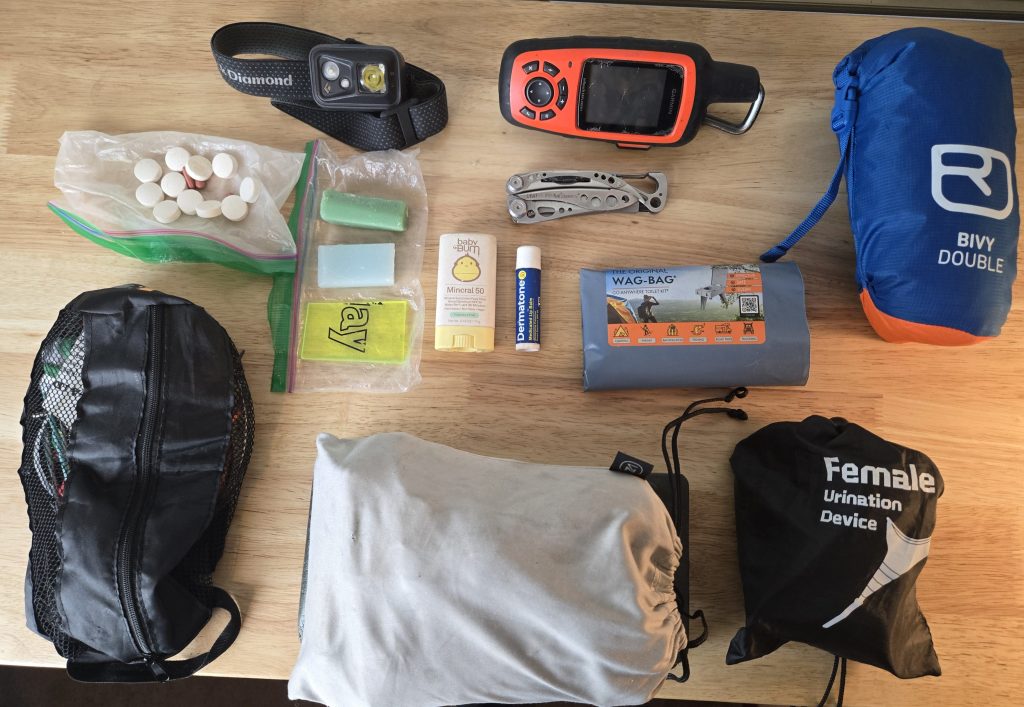
What’s In My Pack?
- Repair kit (duct tape, ski straps, wire)
- First aid kit
- Emergency bivy
- Headlamp
- Skin wax/scraper
- Extra gloves, layers, electrolytes
- Communication device (satellite messenger)

Avalanche Rescue Gear
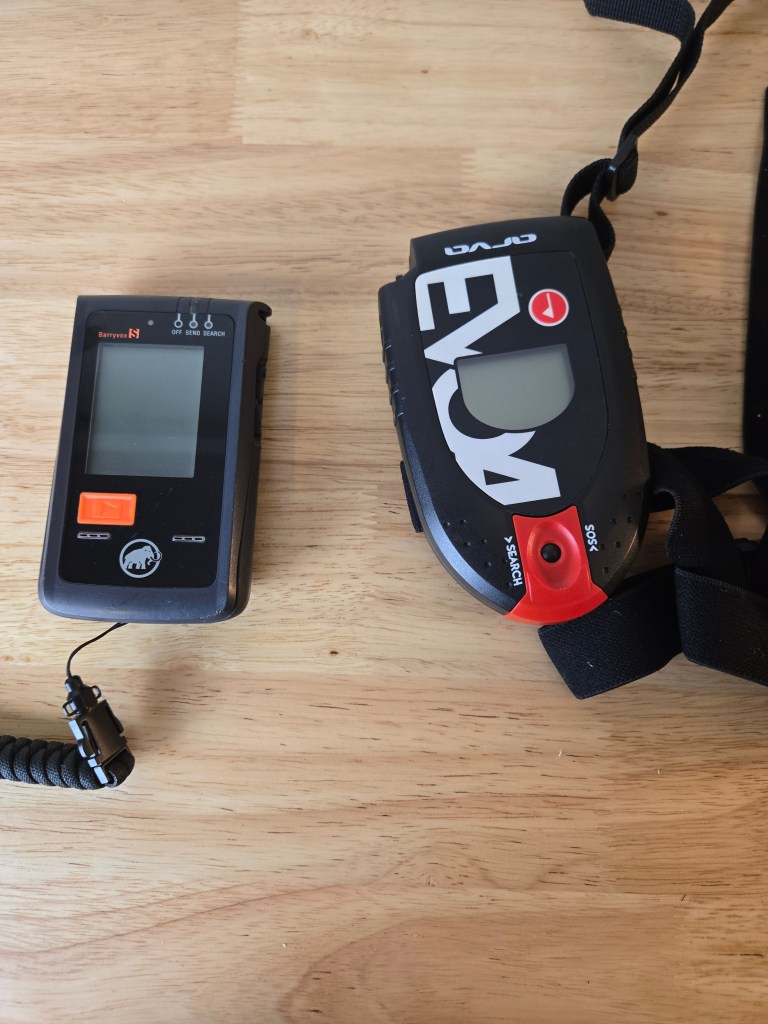
This is not optional. Always carry:
- Beacon: Practice regularly; keep battery >50%; use alkaline only.
- Probe: Quick-deploy, 240cm or longer.
- Shovel: Metal, not plastic. Midweight is often the best balance.
Practice companion rescue in the off-season or pre-season. Beacon drills can be done in parks or backyards.

Clothing & Layering

Dress in layers. Avoid insulated resort-style jackets.
- Base Layer: Merino wool or synthetic.
- Mid Layer: Puffy or vest.
- Shell: Hard shell for storm protection, soft shell for breathability.
- Pants: Must have vents if hard shell.
- Gloves: Leather for durability. Bring thin gloves for touring, warm gloves for skiing.
- Helmet: Ski-rated. Backcountry models are lighter.
- Eyewear: Sunglasses for the up; goggles for storms.
Also bring:
- Buff or face mask
- Sun hoodie
- Light beanie or headband
- Ski socks (not too thick)
Traveling in Avalanche Terrain
Avalanches kill 45 people per year in North America. Avoid becoming a statistic by understanding terrain, snowpack, and your own limitations.
Avalanche Danger Ratings
- Low: Travel generally safe; watch isolated features.
- Moderate: Caution required; evaluate terrain.
- Considerable: Avoid avalanche terrain unless you’re experienced.
- High/Extreme: Stay out of avalanche terrain.
Use local avalanche forecasts (e.g., Utah Avalanche Center) daily. Terrain varies, and danger can differ across aspects and elevations.
Components of an Avalanche
- Bed Surface
- Weak Layer
- Slab
Weak layers often form during cold, clear nights. When storms add weight, that weak layer can fail, propagating a slide. Terrain traps (like gullies) can turn a small slide into a deep burial.
Avalanche Survival
You have 10-15 minutes to rescue a buried partner. Most avalanche deaths are from asphyxiation or trauma. Train for fast, efficient rescue.
Keep practicing. Don’t rely on luck.
The Human Factor
Equipment and knowledge aren’t enough. Most avalanche accidents involve human error. Consider the following:
- Avalanche activity
- Loading (new snow or wind)
- Path (known avalanche path)
- Terrain trap
- Rating (considerable or higher)
- Unstable snow
- Thaw (rapid warming)
Three or more? Time to reassess your plan.
FACETS (Human Factors)
- Familiarity: Just because you’ve skied it before…
- Acceptance: Groupthink and peer pressure.
- Commitment: Goal-focused instead of condition-focused.
- Expert Halo: Blind trust in the most experienced person.
- Tracks: Chasing untracked snow.
- Social Proof: “If others skied it, it must be safe.”
These traps catch even experienced skiers. Talk openly with your group. Make conservative decisions.
Route Planning
Use digital maps like CalTopo or Gaia GPS. Look for:
- Slope angle shading (yellow/red = steep = potential avalanche terrain)
- Aspect and elevation
- Escape routes
- Safe zones and terrain traps
Have a Plan B and a Plan C. Plan B should be just as fun as Plan A! This allows an easy pivot to your alternative. Visualize your descent: where will you go if something breaks? Communicate your plan before dropping in.
Practice & Progression
Backcountry skiing is a skill. It takes time to become efficient and confident.
- Start mellow.
- Practice transitions (ski to skin mode, etc.)
- Fumble with your gear at home first.
- Pack and repack your bag until it becomes second nature.
Your goal should be continuous improvement: better packing, faster transitions, smarter layering, more thoughtful decision-making.
Debrief Every Tour
Ask yourself and your partners:
- What went well?
- What could we improve?
- Were we good or just lucky?
Backcountry partnerships require trust. You’re literally relying on each other for survival. Communicate, check in, and build strong team dynamics.
Education & Next Steps
You’ve made a great start by learning the basics. Keep going:
There are fantastic books too:
Why Go with a Guide?
Hiring a guide isn’t just for big objectives. It’s a smart way to learn:
- Risk management
- Route finding
- Efficient skinning
- Snowpack interpretation
- Mentorship
Wasatch Mountain Guides has one of the most experienced teams in the country. We guide in Utah and internationally, from Alaska to the Andes.
Final Thoughts: Remember Your Why
Backcountry skiing is about freedom, connection, challenge, and joy. It’s about moving through nature under your own power. Don’t lose sight of that.
Take your time. Build your skills. Breathe. Soak it in. Return home safe.
And always, always remember why you started.
Ready to Get Started?
Explore our guided trips and let WMG take you on the adventure of a lifetime. Whether you’re looking to tackle iconic destinations like the Wasatch in Utah or Denali National Park, we’ll ensure you’re prepared, safe, and thrilled every step of the way.

